
Complete Guide to Home Generator Installation & Maintenance for North Carolina Homeowners
Standby Generators: Ensuring Your Home Has Power When It Matters Most
Power outages are no longer rare inconveniences for homeowners across North Carolina. From hurricanes and severe summer storms to aging infrastructure and unexpected grid failures, losing electricity has become a real and growing concern. When the power goes out, daily life can quickly become uncomfortable—or even unsafe—especially during extreme heat, cold, or extended outages.
For North Carolina homeowners looking to protect their comfort, safety, and essential systems, whole-home standby generators offer reliable peace of mind. With more than 50 years of experience serving the Triad, Swaim Electric helps homeowners plan, install, and maintain dependable backup power solutions. This guide explains everything you need to know about home generator installation and maintenance so you can make an informed decision for your home.
What Is a Home Standby Generator and How Does It Work?
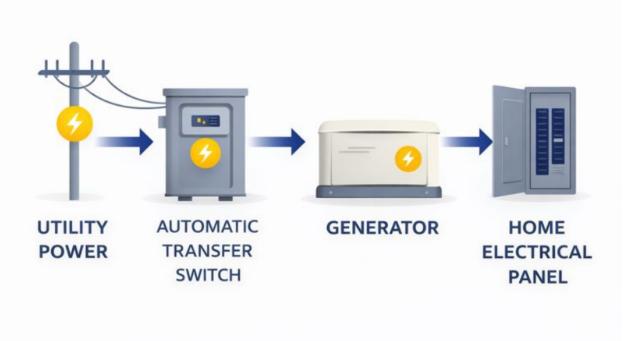
A home standby generator is a permanently installed backup power system designed to automatically supply electricity to your home during an outage. Unlike portable generators, standby generators are connected directly to your home’s electrical system and fuel source.
When utility power fails, the system detects the outage and activates automatically—typically within seconds. Power is delivered through an automatic transfer switch into your home’s electrical panel, keeping essential systems running without any manual setup.
For homeowners exploring backup power options, learning more about Generac whole-house generators is a helpful starting point.
Home Standby Generators vs Portable Generators
Understanding the difference between standby and portable generators is important when choosing the right solution for your home.
Home standby generators operate automatically and are designed to power multiple systems—or even your entire home—during an outage. Because they are permanently installed and professionally integrated, they offer greater safety, reliability, and convenience during long power disruptions.
Portable generators, on the other hand, require manual setup, limited extension-cord connections, and ongoing fuel management. They typically power only a few appliances and may present safety concerns if not used properly. For homeowners seeking uninterrupted comfort and long-term reliability, standby generators are often the preferred choice.
Why Are More North Carolina Homeowners Installing Home Generators?
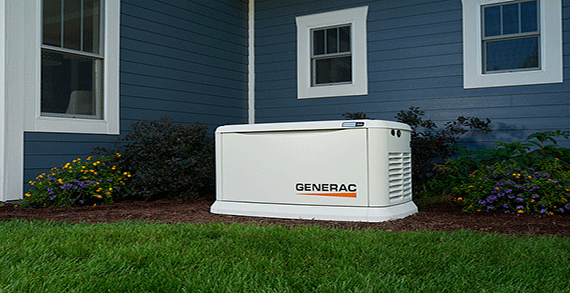
North Carolina’s weather patterns make backup power a smart investment. Hurricanes, tropical storms, summer thunderstorms, and winter weather events regularly cause outages that last hours—or even days.
Rather than waiting for the next outage to disrupt daily life, many homeowners are installing whole-home generators to maintain power for critical systems such as:
- HVAC systems
- Refrigeration and food storage
- Security systems
- Medical devices
- Internet and work-from-home setups
- Well pumps and water systems
To learn more about the installation process, visit our generator installation blog.
What Does the Home Generator Installation Process Involve?
Professional installation ensures your generator operates safely, efficiently, and in compliance with local codes.
In-Home Power Assessment
A licensed electrician evaluates your electrical system,
fuel availability, and ideal placement for the generator.
Permitting & Code Compliance
Required permits and inspections are handled
to meet North Carolina and local regulations.
Electrical & Fuel Integration
The generator is connected to your fuel source
and integrated with your electrical panel and
automatic transfer switch.
System Testing & Walkthrough
Your system is tested under load, and you receive
guidance on operation and routine care.
Once installed, ongoing professional maintenance helps ensure long-term reliability.
Thinking about installing a generator?
Schedule a free in-home power assessment with Swaim Electric.
How Much Does a Home Generator Cost in North Carolina?
The cost of a home generator system varies depending on several factors, and there is no one-size-fits-all price.
Key factors that influence cost include:
- Generator size and power output
- Electrical upgrades needed for your home
- Fuel type (natural gas or propane)
- Installation complexity and site conditions
- Ongoing maintenance and service needs
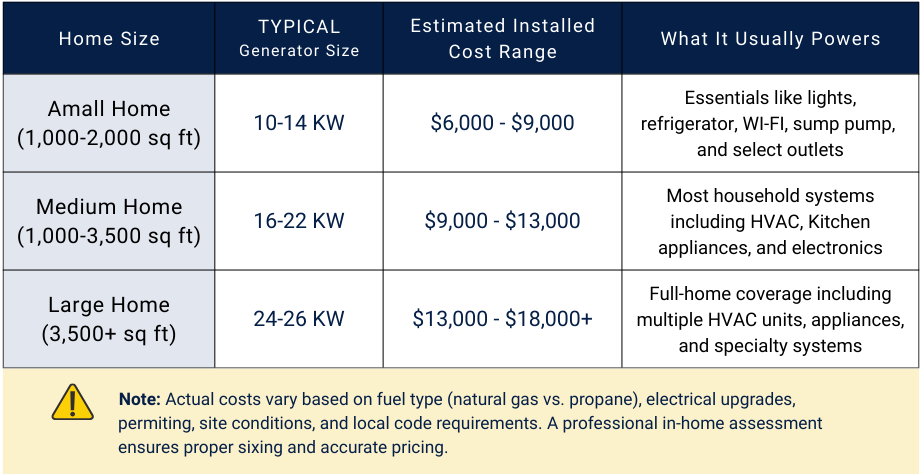
Because every home is different, costs can vary significantly. A professional assessment helps determine the right system for your needs and provides accurate expectations before installation.
Whole-Home Generator Cost Comparison by Home Size
How Do You Choose the Right Generator Size for Your Home?
Choosing the correct generator size ensures your system delivers reliable power without unnecessary expense.
A professional assessment considers:
- Total electrical load
- Essential versus non-essential circuits
- HVAC power requirements
- Medical or specialty equipment
- Household lifestyle and usage patterns
An undersized generator may not support critical systems, while an oversized unit can increase costs without added benefit.
Why Professional Generator Installation Matters
Installing a generator is not a DIY project. Professional installation protects your home, your investment, and your safety.
Licensed installation ensures:
- Compliance with North Carolina electrical codes
- Proper fuel line placement and ventilation
- Accurate load calculations
- Protection of manufacturer warranties
- Long-term system reliability during real outages
Working with an experienced local electrician helps ensure your generator performs when you need it most.
Why Is Generator Maintenance Just as Important as Installation?
Even the best generator requires routine maintenance to remain dependable. Without proper care, issues such as dead batteries, degraded oil, clogged filters, or startup failures can occur—often at the worst possible time.
Many homeowners choose an HVAC and generator maintenance plan to ensure service is performed on schedule and their system is always ready.
Do You Need Surge Protection With a Home Generator?
Power surges often occur during outages and when utility power is restored. Without protection, surges can damage appliances, electronics, HVAC systems, and even the generator itself.
Whole-home surge protection adds an important layer of defense, whether your home is running on utility power or backup power. Learn more in our blog on surge protection with and without a generator.
How Generators Support HVAC Systems & Home Comfort
A properly sized generator keeps your HVAC system operating during outages, maintaining indoor comfort regardless of outdoor conditions. This is especially important for families with health needs, pets, or work-from-home requirements.
For more details, see our guide on how HVAC systems and backup generators work together.
Local Factors That Affect Generator Installation in North Carolina
Local conditions play an important role in generator planning and installation. Homeowners should consider:
- Hurricane season (June–November)
- Utility provider requirements
- Flood zones and drainage
- City regulations and HOA rules
Working with a local provider ensures these regional factors are addressed during system design and installation. View our generator service areas to see the communities we serve.
Why Choose Swaim Electric for Generator Installation?

Over 50 years serving North Carolina homeowners

Licensed and insured electricians

Extensive Generac generator experience

Local permitting and inspection knowledge
Ongoing maintenance and support options
Want to learn more about your generator’s performance once the power goes out?
Our team understands the electrical needs of homes across the Triad and is committed to safe, reliable installations.
Frequently Asked Questions About Home Generator Installation & Maintenance
How long can a home generator run?
As long as fuel is available. Natural gas systems can operate continuously during extended outages.
Do home standby generators start automatically?
Yes, standby generators activate automatically when utility power is lost.
How often does a generator need maintenance?
Professional maintenance is recommended at least once per year.
Can a home generator power my HVAC system?
Yes, when properly sized.
Are generators loud?
Modern generators operate quietly and comply with local noise regulations.
Do generators work during hurricanes?
Yes, when installed correctly and properly maintained.
Do I need a permit to install a generator in North Carolina?
Yes. Permits and inspections are required and handled during professional installation.
How long does generator installation take?
Most installations are completed within a few days, depending on complexity.
Ready to Protect Your Home With Backup Power?
A home standby generator is an investment in comfort, safety, and peace of mind. Whether you’re preparing for storm season or planning long-term reliability, professional installation and maintenance make all the difference.
Speak with the trusted generator specialists at Swaim Electric and schedule your free in-home power assessment today.